

Specialist Roof Spray Foam Removal From Tiles And Sarking Felt, Covering Kept Intact
Bonded foam is the version lenders object to hardest and the version rushed jobs destroy. We cut it back to the surrounding structure, then finish on the grain by hand.




Why Roof-Applied Spray Foam Worries Surveyors Most
Foam bonded to your tiles or sarking felt hides two things at once, the covering and the timber underneath it. That combination is why it causes the problems below.
Tiles welded to a hidden felt
Many older roofs had the sarking felt stripped out before the foam went on. Foam then bonds the tiles and battens into one solid mass, and a single slipped tile can mean stripping the entire roof to fix it.
Two defects hiding as one
Foam bonded straight onto tiles or sarking felt hides the covering and the timber in a single layer, which is why surveyors mark it as the highest-risk type. Swelling or shifting timber under the foam can distort the roof line before a covering fault ever shows on the surface.
Rafters that fail from the top down
Trapped moisture under bonded foam reaches the rafters before it reaches anywhere you can see. The timber loses strength for months before a stain, a sag or a leak gives it away.
Ventilation you cannot get back cheaply
Foam blocks the eaves and ridge airflow the roof was built around. Restoring it after removal means fitting vents and breathable underlay, not just taking the foam away.
What A Roof Needs Once Bonded Foam Is Off
Cutting the foam back is the easy part to picture. Covering, ventilation and the timber underneath all need checking before the roof goes back together.
Mortgage and survey preparation
Bonded roof foam gets flagged harder at survey than any other type, because there is no way to see the covering and the timber underneath at the same time. That is the gap an independent specialist report is meant to close, and ours works from dated photographs and moisture readings taken at every stage of the strip-out.
Roof cleaning after removal
Cutting bonded foam off tiles and sarking felt does not leave a clean roof behind it. Adhesive residue and debris sit in the gutters and across the covering until someone deals with it. Hand-washing the tiles, clearing the gutters and treating any moss we disturbed is how we finish the job, not an optional extra.
Rafter and sarking inspection
Rafters and sarking that spent years hidden under bonded foam get checked timber by timber: soft or discoloured wood, insect activity, water staining, the same signs a survey looks for. We photograph what we find and set out what needs treating before the covering goes back on.
Loft insulation replacement, if disturbed
Roof-level foam removal does not always touch the insulation at joist level below it. Where it does, we fit it back to the Building Regulations target of 270mm of mineral wool, or 120 to 150mm of rigid PIR board, so the loft is not left worse off than before.
Roof ventilation improvements
A cold roof needs 25,000mm2 of ventilation per metre at the eaves and 5,000mm2 at the ridge under BS 5250, and bonded foam blocks both. We fit vents and breathable underlay to restore it, or switch the build to a warm roof, which the standard does not require to be ventilated at all.
Safe disposal of the waste
Bonded foam comes off in solid sheets, not the loose bags most kerbside and recycling centre collections are set up for. It has to go through a registered waste carrier instead, and we handle that ourselves, right down to the Waste Transfer Note that proves it happened.
How We Strip Bonded Foam Off Your Roof
Scaffold goes up, the covering comes off in stages, and the roof gets signed off once every rafter has been checked. Six steps, start to finish.
Survey and plan
Because bonded foam hides the covering as well as the timber, the survey has to work out how far it spreads across the rafters and sarking before a price or method gets agreed. Photographs of the roof as found go into the record before anything is cut.
Protect and contain
Scaffold and sheeting go up to protect the elevations and anything below before cutting starts, since bonded foam comes away from tiles and felt in unpredictable pieces.
Strip the bulk foam
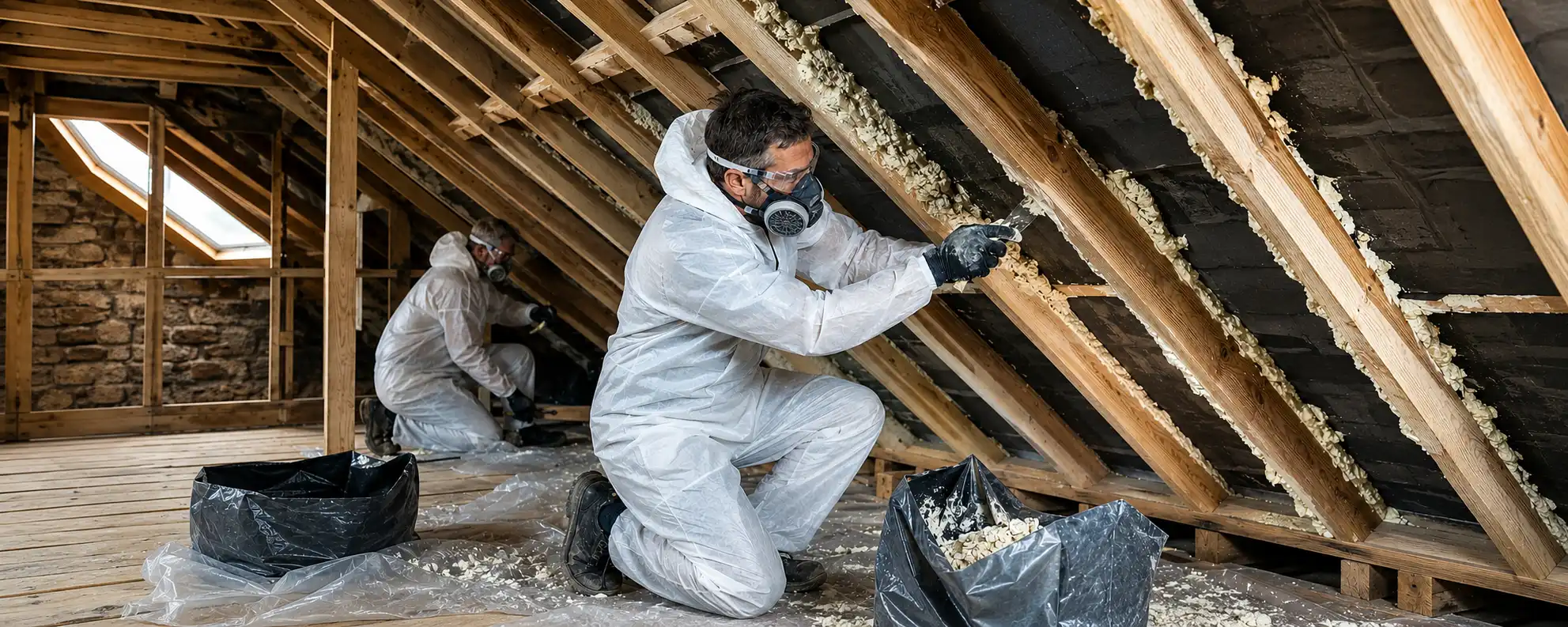
Bonded foam gets cut back from the tiles and sarking felt in bulk first, worked section by section across the roof rather than pulled off in one motion that risks the covering.
Hand-finish and extract
What is left bonded to the rafters after the bulk cut comes off by hand, on the grain, while extraction draws the dust and fragments out of the roof space instead of down through the house.
Inspect and treat the timber
Every rafter and length of sarking gets checked once the covering is back far enough to see it: soft or discoloured wood, insect activity, water staining, the signs a lender's surveyor will also be looking for. We photograph what we find and set out what needs treating before the covering goes back on.
Reinstate, dispose and certify
Covering, ventilation and any disturbed insulation go back to current standards before the scaffold comes down. We remove the waste under our own carrier licence and hand over the Waste Transfer Note, photographs and moisture readings once the roof is signed off.
Why Homeowners Across Hampshire Choose JSA
JSA combines specialist spray foam removal with extensive roofing knowledge to deliver safe, professional results. From careful foam extraction and roof timber inspections to repairs and ventilation improvements, we provide a complete service backed by honest advice, transparent pricing and quality workmanship.

15+ Years of Roofing Expertise
Our experienced roofing team understands the structure beneath your spray foam insulation, allowing us to remove it safely while protecting roof timbers, tiles and other essential components.

Specialist Spray Foam Removal
With five years dedicated to spray foam insulation removal, we safely remove both open-cell and closed-cell foam using proven techniques that minimise disruption and help preserve your roof's condition.

Honest Advice & Transparent Pricing
We believe in straightforward recommendations, competitive pricing and no hidden costs. Every quotation is clear, with free, no-obligation advice to help you make the right decision for your property.
Trusted by Homeowners Across Hampshire
Read genuine customer reviews and see why homeowners and businesses trust JSA Spray Foam Removal for safe, professional workmanship. Visit our Checkatrade profile to discover honest feedback from customers who have experienced our reliable service and quality results firsthand.



Have Questions? We've Got the Answers
Find answers to the most common questions about spray foam insulation removal, roofing services, property surveys and our removal process. If you need further advice, our friendly team is always happy to help with free, no-obligation guidance.
Can you remove spray foam without damaging the roof tiles?
Cutting bonded foam free is the part that risks the covering, so it comes off in bulk first, then the last of it is worked off the tiles and battens by hand rather than pulled in one motion. Any tile that does not survive gets replaced as part of the job.
Why do lenders treat roof-applied foam as higher risk than loft foam?
Because it hides the covering as well as the timber in one layer, which a standard survey cannot separate into two defects. That is the reason a RICS surveyor is more likely to request an independent specialist report on roof-applied foam than on foam sitting loose at joist level.
Does removing roof foam mean re-covering the whole roof?
Not on every job. Where the covering survives the cut-back it stays, and only the felt or membrane underneath needs renewing in most cases. Where tiles were bonded hard enough to crack on removal, those sections get re-covered instead of the whole roof.
How long does roof spray foam removal take compared to a loft job?
Roof-applied foam tends to take longer than loft foam of the same area, because the work happens from scaffold and the foam sits bonded rather than loose in a void. Most roof jobs sit toward the longer end of the 2 to 5 day range spray foam removal falls into.
What happens to roof ventilation after the foam comes off?
BS 5250 sets a cold roof's ventilation at 25,000mm2 per metre at the eaves and 5,000mm2 at the ridge, airflow bonded foam blocks while it is in place. We reopen it with vents and breathable underlay once the foam is gone, or build the roof as a warm roof instead, which needs none at all.
Do you clean the roof after removing bonded foam?
Yes, as standard, not as an extra. Cutting bonded foam off tiles and sarking felt leaves adhesive marks and debris that a hose alone will not shift, so we wash the covering down by hand and clear the gutters before the job is called finished.
Professional Spray Foam Removal Across Hampshire
JSA Spray Foam Removal proudly serves homeowners and commercial properties throughout Hampshire and the surrounding areas, delivering trusted spray foam removal, roofing services and free, no-obligation quotations wherever you need us.

Let's Work Together
Need a Roofer You Can Rely On?
From a slipped tile to a full re-roof, JSA Roofing Solutions gives you honest advice, quality workmanship and more than 15 years of experience across Hampshire. Get in touch for a free, no-obligation quotation and clear written costs before any work begins on your roof.


8:00 AM – 6:00 PM
Saturday & Sunday
Closed