

Loft Spray Foam Removal Specialists Restoring Storage, Access And Clean Dry Timber
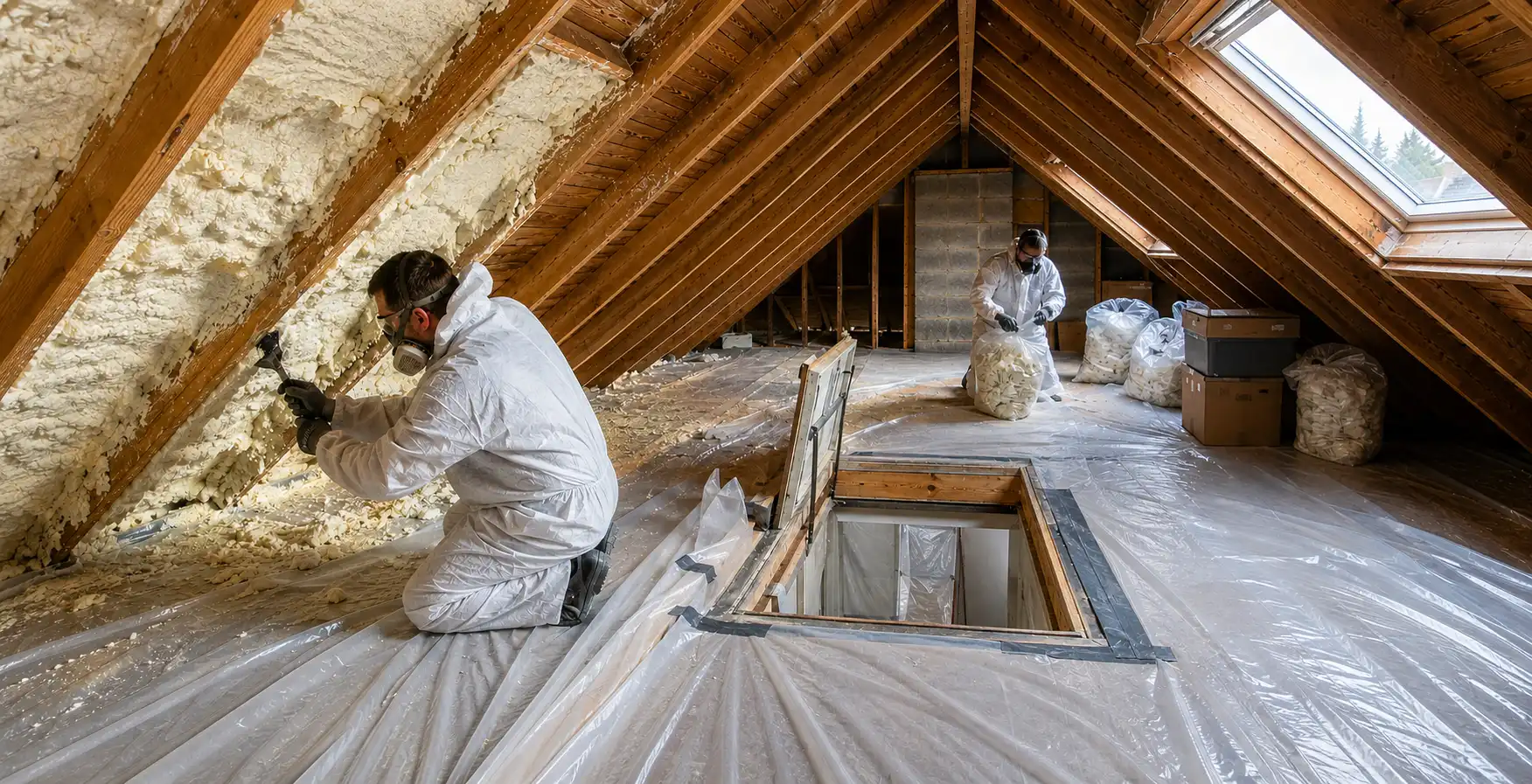
Foam packed between joists and rafters blocks the hatch and hides damp. We work section by section, sheet the rooms below, and leave the space clear enough to store in.




Why Loft Spray Foam Causes More Problems Than It Solves
A sealed loft cannot breathe, and foam packed against the joists hides what that does to the timber underneath. These are the problems it creates.
Sealed loft, silent rot
Foam packed between the joists stops the loft breathing. Moisture that would vent through the roof condenses against the timber instead, and the joists rot where you cannot reach them to check.
Damp that shows too late to matter
Foam packed against the joists hides the damp staining that would otherwise reach the ceiling below as a warning mark. By the time anyone sees a stain, the timber has stayed wet long enough for a survey to flag it and a lender to decline the loan.
A hatch that will not open
Foam sprayed near the hatch opening can spread onto the frame and seal it shut. Some homeowners cannot get into their own loft until a specialist cuts the foam back from the frame.
An equity release application that stalls
Loft foam is the version equity release companies flag hardest, and only a couple consider it at all. Most homeowners find out only when a valuer's report comes back against them.
What A Loft Needs Once The Foam Is Gone
Clearing the joists is only the start. Insulation, ventilation and the paperwork for your survey all need sorting before the job is finished.
Mortgage and survey preparation
Equity release companies and RICS surveyors scrutinise loft foam harder than almost any other type. Photographs from before the joists were touched, through the strip-out, to the bare timber afterward give a surveyor's independent report something concrete to check, rather than taking our word for it.
Joist and rafter inspection
Foam hides timber decay for years, so once the joists are clear we go over every one for soft or discoloured wood, insect activity and water staining before anything covers them again. Photographs of what we find go to you, along with what needs treating and what does not.
Loft insulation replacement
Take the foam out and the loft has zero insulation. Building Regulations target 270mm of mineral wool laid in two layers across the joists, or 120 to 150mm of rigid PIR board if you want the depth without losing headroom. We fit it to whichever depth suits your loft.
Loft ventilation restored
BS 5250 sets a cold loft's ventilation at 25,000mm2 per metre at the eaves and 5,000mm2 at the ridge, and foam closes that airflow off. We restore it with soffit and ridge vents, so the joists we just inspected are not straight back where they started.
Safe disposal of the waste
Carrying spray foam waste out of a loft yourself, without a registered waste carrier licence, is against the law, and household recycling centres will not take it in bulk regardless. We remove it under our own licence and hand you the Waste Transfer Note, so there is a paper trail if anyone asks.
How We Clear Foam From Your Loft
From the first look at the joists to the Waste Transfer Note in your inbox, this is how a loft strip-out runs.
Survey and plan
Before we touch a joist we check how far the foam spreads across the loft floor and whether it has already reached the hatch frame or the eaves. Price and method get agreed at this point, with photographs taken of the loft as we found it.
Protect and contain
The hatch is the only way dust travels down into the house, so it gets sealed and the landing below gets sheeted before any foam comes out. Everything the loft could shed stays in the loft.
Strip the bulk foam
Foam packed between the joists comes off in bulk first, cleared back close to the timber section by section rather than in one pass across the whole loft.
Hand-finish and extract
The residue left on the joists after the bulk strip comes off by hand, chisel and scraper on the grain, while a vacuum pulls the loose material and dust out through the hatch as we go.
Inspect and treat the timber
Every joist gets checked once it is clear: soft or discoloured wood, insect activity, water staining, the marks foam hid for years. Anything that needs treating gets dealt with before insulation goes back down.
Reinstate, dispose and certify
The waste leaves the loft under our own registered carrier licence, bagged the same day it comes out rather than left on site. Insulation goes back in to current Building Regulations depth, and you get the Waste Transfer Note with photographs and moisture readings for the loft as it stands now.
Why Homeowners Across Hampshire Choose JSA
JSA combines specialist spray foam removal with extensive roofing knowledge to deliver safe, professional results. From careful foam extraction and roof timber inspections to repairs and ventilation improvements, we provide a complete service backed by honest advice, transparent pricing and quality workmanship.

15+ Years of Roofing Expertise
Our experienced roofing team understands the structure beneath your spray foam insulation, allowing us to remove it safely while protecting roof timbers, tiles and other essential components.

Specialist Spray Foam Removal
With five years dedicated to spray foam insulation removal, we safely remove both open-cell and closed-cell foam using proven techniques that minimise disruption and help preserve your roof's condition.

Honest Advice & Transparent Pricing
We believe in straightforward recommendations, competitive pricing and no hidden costs. Every quotation is clear, with free, no-obligation advice to help you make the right decision for your property.
Trusted by Homeowners Across Hampshire
Read genuine customer reviews and see why homeowners and businesses trust JSA Spray Foam Removal for safe, professional workmanship. Visit our Checkatrade profile to discover honest feedback from customers who have experienced our reliable service and quality results firsthand.



Have Questions? We've Got the Answers
Find answers to the most common questions about spray foam insulation removal, roofing services, property surveys and our removal process. If you need further advice, our friendly team is always happy to help with free, no-obligation guidance.
Can spray foam be removed from a loft without losing headroom?
Removing the foam does not cost you headroom. Building Regulations target 270mm of mineral wool laid across the joists, or 120 to 150mm if you switch to rigid PIR board, which is worth asking for on a loft with limited height to begin with.
Will loft foam removal affect my equity release application?
Loft foam is the type equity release providers scrutinise hardest, more so than most other locations. Photographic and moisture-reading evidence from the strip-out is what a valuer's independent report gets checked against, not the fact that the foam is gone.
How do you get spray foam out from between loft joists without damaging them?
The bulk comes off in sections, then the residue on each joist gets worked off by hand with chisels and scrapers on the grain. Nothing solvent-based touches the timber, which is the part that would risk splitting or staining it.
Is loft foam removal messy?
Less than most people expect, because containment goes up before the first cut. The hatch gets sealed and a vacuum runs through the hand-finishing stage, so dust and loose fragments leave through the loft rather than travelling down into the house.
Do I need to replace loft insulation after foam removal?
Almost always, since foam leaves the joists bare. We fit mineral wool or rigid board back to the current Building Regulations target once the timber underneath has been checked and treated where it needed it.
What signs of loft timber damage do you look for after foam removal?
Soft or discoloured wood, insect activity such as woodworm, and water staining, the same three signs a surveyor looks for. We photograph what we find and set out what needs treating before anything goes back over the joists.
Professional Spray Foam Removal Across Hampshire
JSA Spray Foam Removal proudly serves homeowners and commercial properties throughout Hampshire and the surrounding areas, delivering trusted spray foam removal, roofing services and free, no-obligation quotations wherever you need us.

Let's Work Together

Need a Roofer You Can Rely On?
From a slipped tile to a full re-roof, JSA Roofing Solutions gives you honest advice, quality workmanship and more than 15 years of experience across Hampshire. Get in touch for a free, no-obligation quotation and clear written costs before any work begins on your roof.


8:00 AM – 6:00 PM
Saturday & Sunday
Closed