

Spray Foam Removal in Clanfield
Clanfield sits on the edge of the South Downs, where exposure and mixed housing ages both matter. We survey each roof on its own terms before quoting.
Spray Foam Removal In Clanfield And The Downs Edge
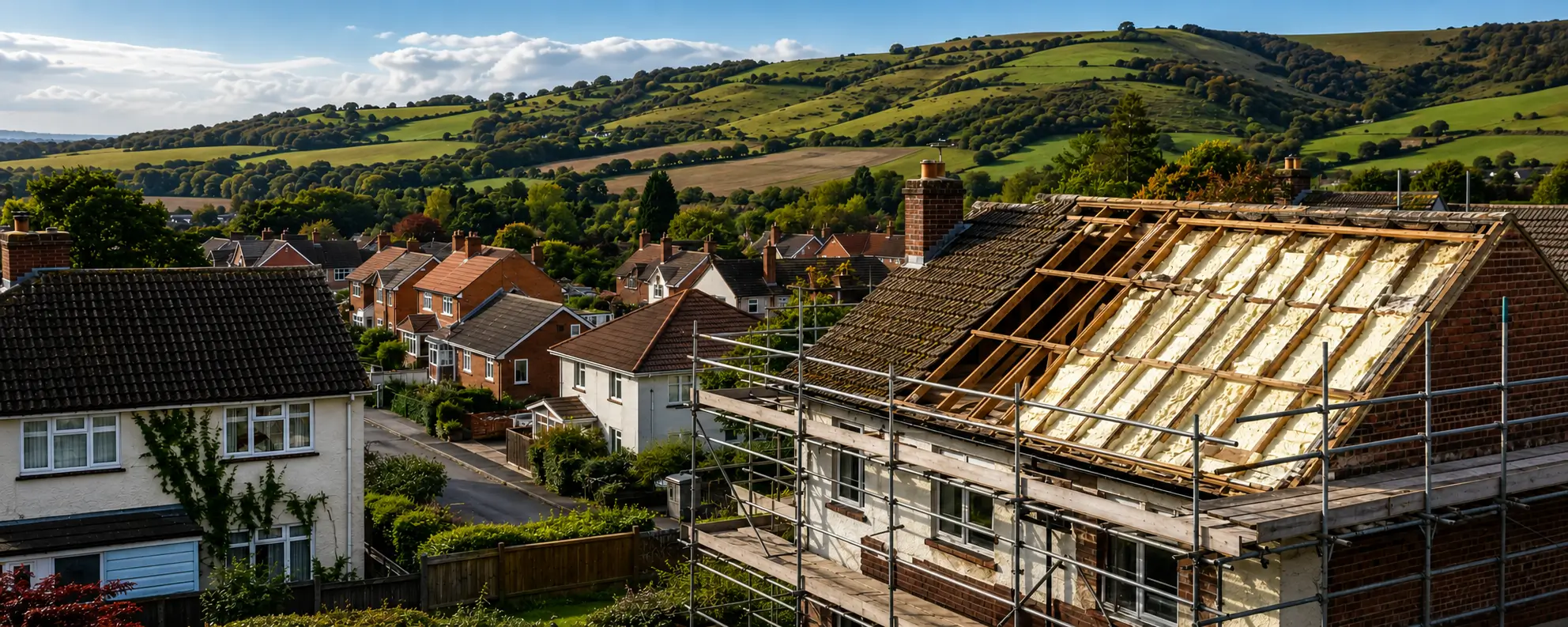
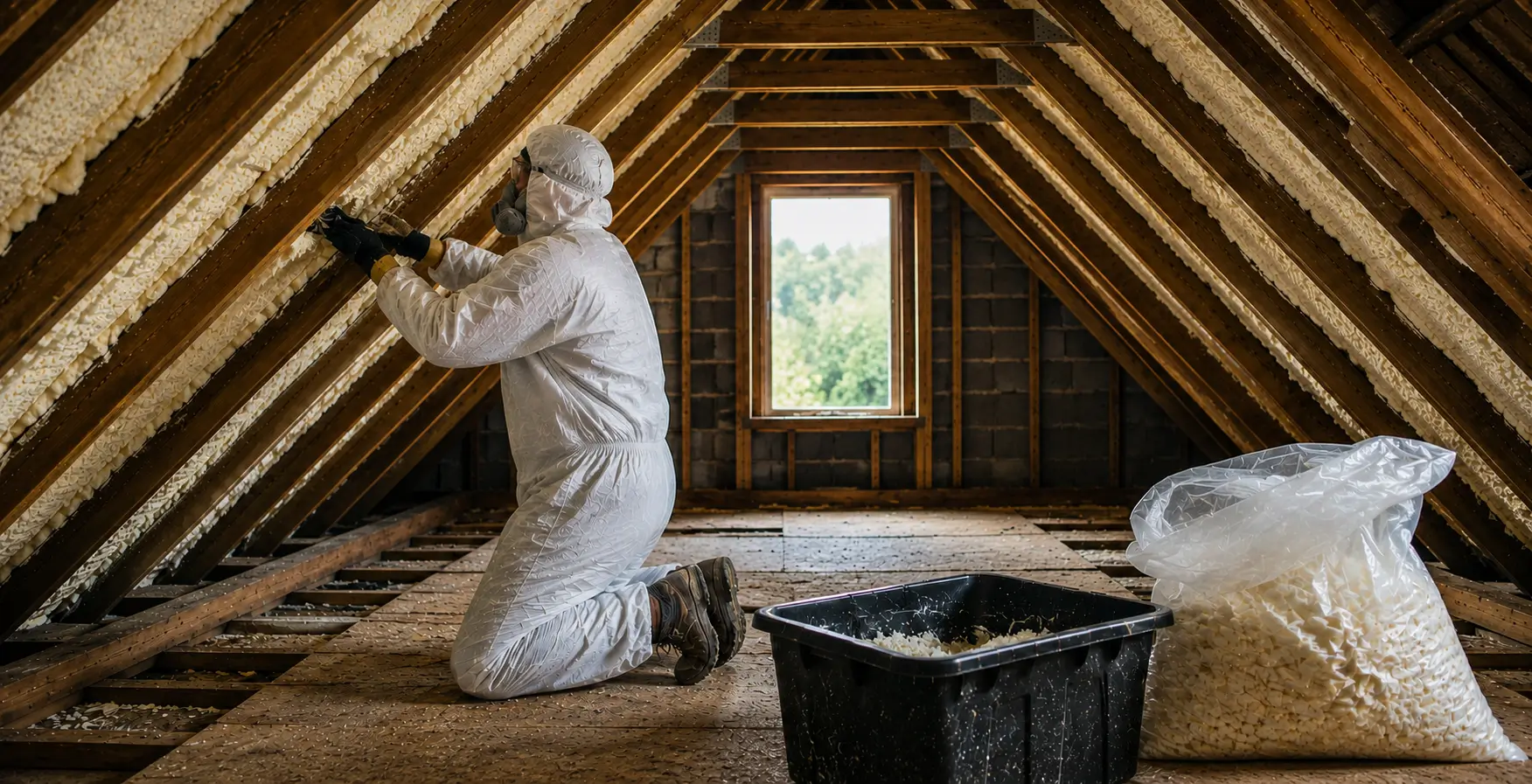
Clanfield lies at the foot of the downs between Waterlooville and Petersfield, part village and part later development, with a scattering of older cottages among estates built in the last few decades. There is no single dominant building era, which means less can be assumed here than in a town with a uniform character. The downland position matters as much as the housing. Properties on this edge take more wind than anything in the sheltered valleys, and exposed roofs lose ridge tiles and verge mortar sooner. Where foam was sprayed onto the underside of a covering already loosening in the wind, removal has to account for tiles that may not be holding as well as they look. We check that at survey, along with the foam type and how much of the roof it covers, because a rural property with good access can still be an awkward job if the covering is fragile.




Nothing Assumed From The Postcode
In a village where a 17th century cottage and a 2005 estate house sit within a few hundred metres, guessing from the address is how firms get quotes wrong. We look at each roof and price what we find. Being roofers first also helps on exposed downland property, because we can tell you whether the covering will survive the removal and what it needs afterward, rather than clearing the foam and leaving the tile problem for somebody else to quote separately.

15+ Years of Roofing Expertise
Our experienced roofing team understands the structure beneath your spray foam insulation, allowing us to remove it safely while protecting roof timbers, tiles and other essential components.

Specialist Spray Foam Removal
With five years dedicated to spray foam insulation removal, we safely remove both open-cell and closed-cell foam using proven techniques that minimise disruption and help preserve your roof's condition.

Honest Advice & Transparent Pricing
We believe in straightforward recommendations, competitive pricing and no hidden costs. Every quotation is clear, with free, no-obligation advice to help you make the right decision for your property.
What Clanfield Homeowners Ask Before A Survey
A village this varied in housing age and this exposed to the downs brings a wide range of questions. These are the ones asked first.
Do you take the waste away, or do I need a skip?
We take it. Most household recycling centres will not accept spray foam in bulk, and moving it yourself without a registered waste carrier licence is against the law. It leaves under our own licence and you get the Waste Transfer Note as proof of where it went.
How long does the work take?
Most UK jobs run two to five working days. Where yours falls depends on the size of the roof, how much foam is there and how easy the space is to access. A small loft with a thin layer of open-cell foam sits at the short end, a detached roof bonded in closed-cell at the long end.
How much does spray foam removal cost in Clanfield?
There is no flat rate we could give you before seeing the roof. Price turns on the foam type, how much of the roof it covers, the condition of the timber underneath and how hard the space is to reach. The survey is free, and the written figure it produces does not move once work starts.
What happens when I book a survey in Clanfield?
We come out and get into the roof space. That tells us the foam type, how far it spreads, the condition of the timber underneath and how equipment will reach it. You then get a written quotation covering the whole job. The survey is free and carries no obligation.
Does an exposed downland position change how the roof is ventilated afterward?
It makes the ventilation matter more. A roof catching weather off open ground relies on the eaves and ridge airflow doing real work, so we size the vents to the roof rather than fitting a token one and calling it done.
Will removal damage tiles that are already loose?
It can if nobody checks first. Exposed downland roofs lose verge mortar and ridge bedding sooner than sheltered ones, so we assess the covering at survey and tell you what it will need once the foam is off.
Professional Spray Foam Removal Across Hampshire
JSA Spray Foam Removal proudly serves homeowners and commercial properties throughout Hampshire and the surrounding areas, delivering trusted spray foam removal, roofing services and free, no-obligation quotations wherever you need us.

Let's Work Together

Need a Roofer You Can Rely On?
From a slipped tile to a full re-roof, JSA Roofing Solutions gives you honest advice, quality workmanship and more than 15 years of experience across Hampshire. Get in touch for a free, no-obligation quotation and clear written costs before any work begins on your roof.


8:00 AM – 6:00 PM
Saturday & Sunday
Closed