


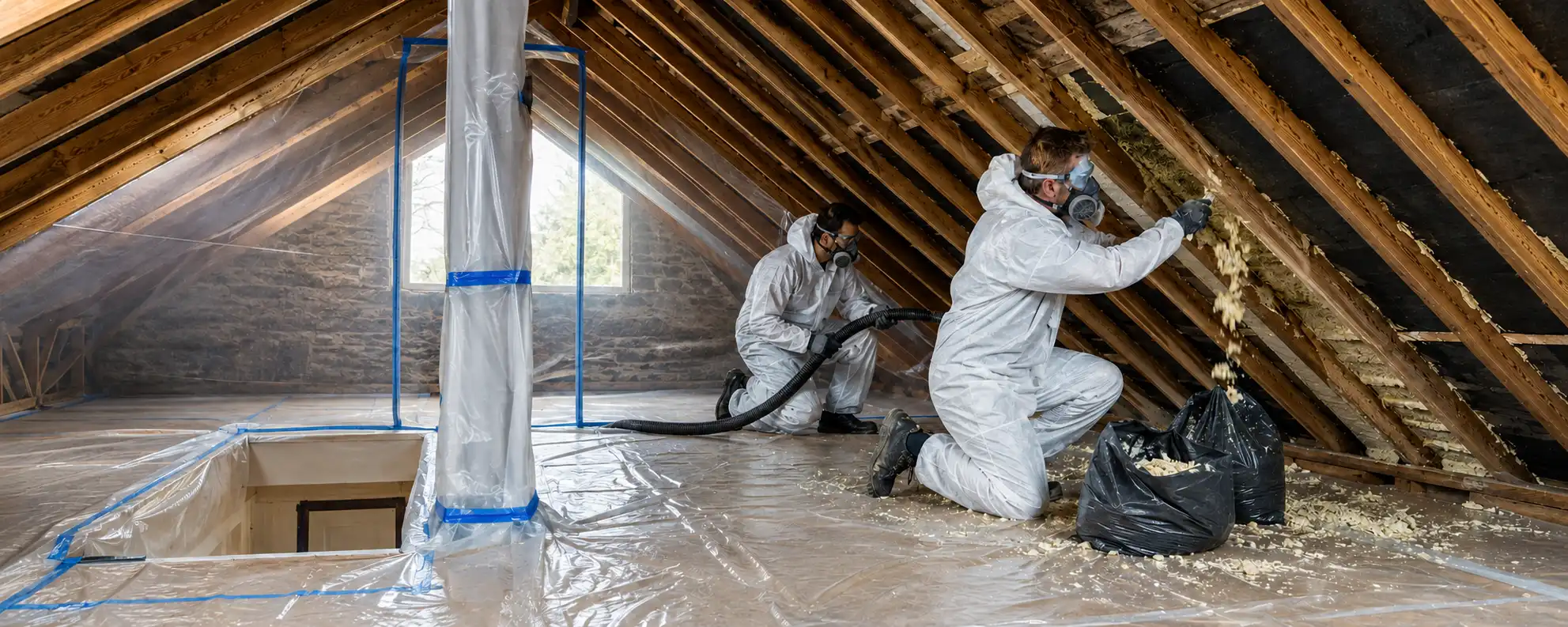
Open-Cell Spray Foam Removal Done Under Containment, Not Through Your Living Rooms
Open-cell crumbles the moment anyone touches it and pushes dust through the house. We seal the loft off, extract as we go, and take the debris straight outside.




Why Open-Cell Spray Foam Causes Damp And Dust Problems
Open-cell absorbs water instead of blocking it, and crumbles the moment it is disturbed. Both of those properties cause the problems set out below.
A sponge where you need a seal
Open-cell foam is porous, so instead of blocking water it absorbs it. The timber underneath stays wet for longer after a leak than it would with no insulation there at all.
Dust that reaches the whole house
Open-cell foam turns brittle and crumbles once disturbed, and the dust travels through the loft hatch into the rooms below. Any DIY attempt at removal spreads it further before anyone notices.
Moisture with nowhere to go
The open matrix holds damp air against the timber instead of letting it vent outside. Condensation forms inside the foam itself, invisible until the rot underneath is already advanced.
Mould you cannot see until you strip it back
Trapped humidity inside open-cell foam creates the conditions mould needs. It grows against the timber, hidden by the foam that caused it, until the foam comes off.
What Comes Next After Open-Cell Removal
Open-cell rarely leaves a space in a state you can close up and forget. Insulation, ventilation and the damp it left behind all need attention.
Mortgage and survey preparation
Open-cell foam leaves nothing to see once it is sprayed, so if a lender's valuer wants an independent specialist report after removal, dated photographs and moisture readings from the strip-out are what that report gets checked against.
Roof cleaning, where foam reached the covering
Open-cell tends to go on at loft level, but where it has also reached the roof covering we wash the tiles down by hand, clear the gutters and treat any moss disturbed during the work, so nothing is left half finished.
Timber inspection
Because open-cell absorbs water rather than blocking it, the rafters and joists underneath get checked once it is off: soft or discoloured wood, insect activity, water staining. We photograph what we find and set out what needs treating before anything goes back over.
Loft insulation replacement
Open-cell foam is almost always what stood in for loft insulation, so removing it leaves the loft with none. Building Regulations target 270mm of mineral wool in two layers, or 120 to 150mm of rigid PIR board. We fit it to whichever depth your loft needs.
Ventilation improvements
Open-cell still blocks the same airflow BS 5250 sets for a cold roof, 25,000mm2 per metre at the eaves and 5,000mm2 at the ridge, even though it lets water through. Soffit and ridge vents put that airflow back, so the moisture problem the foam caused does not repeat itself.
Safe disposal of the waste
Open-cell breaks up as it comes away, so the waste starts as loose fragments rather than one solid mass, and none of it is something a recycling centre will accept without a registered carrier involved. We collect it under our own licence as we work and issue the Waste Transfer Note once the job closes out.
How We Remove Open-Cell Foam Without Spreading Dust
Open-cell crumbles the moment it is disturbed, so containment and extraction run from the first cut. Here is the process built around that.
Survey and plan
Open-cell absorbs water rather than blocking it, so the survey checks for damp as much as it checks the extent of the foam. Method and price get agreed before anything is cut, with photographs of the space as it was found.
Protect and contain
Open-cell crumbles the moment it is disturbed, so containment matters here more than on any other foam type: the loft gets sealed and dust extraction is running before the first cut, not started partway through.
Strip the bulk foam
Open-cell comes off in bulk fast, since it is soft enough to break down without much force, though the crumbling means more of it ends up as airborne dust than with a rigid foam.
Hand-finish and extract
Residue left on the timber after the bulk strip comes off by hand while the vacuum runs the whole time, drawing loose fragments and dust out of the space rather than letting them settle.
Inspect and treat the timber
Because open-cell holds moisture against the timber instead of shedding it, we check every rafter and joist for soft or discoloured wood, insect activity and water staining once it is off.
Reinstate, dispose and certify
Because open-cell holds damp, the moisture readings taken at this stage matter more than on a drier foam type, and they go to you along with the Waste Transfer Note once the waste is off site under our own licence. Insulation and ventilation get reinstated to current standards at the same time.
Why Homeowners Across Hampshire Choose JSA
JSA combines specialist spray foam removal with extensive roofing knowledge to deliver safe, professional results. From careful foam extraction and roof timber inspections to repairs and ventilation improvements, we provide a complete service backed by honest advice, transparent pricing and quality workmanship.

15+ Years of Roofing Expertise
Our experienced roofing team understands the structure beneath your spray foam insulation, allowing us to remove it safely while protecting roof timbers, tiles and other essential components.

Specialist Spray Foam Removal
With five years dedicated to spray foam insulation removal, we safely remove both open-cell and closed-cell foam using proven techniques that minimise disruption and help preserve your roof's condition.

Honest Advice & Transparent Pricing
We believe in straightforward recommendations, competitive pricing and no hidden costs. Every quotation is clear, with free, no-obligation advice to help you make the right decision for your property.
Trusted by Homeowners Across Hampshire
Read genuine customer reviews and see why homeowners and businesses trust JSA Spray Foam Removal for safe, professional workmanship. Visit our Checkatrade profile to discover honest feedback from customers who have experienced our reliable service and quality results firsthand.



Have Questions? We've Got the Answers
Find answers to the most common questions about spray foam insulation removal, roofing services, property surveys and our removal process. If you need further advice, our friendly team is always happy to help with free, no-obligation guidance.
Is open-cell spray foam removal messier than closed-cell?
Yes, because it crumbles rather than coming away in one piece. Containment and continuous vacuum extraction matter more on open-cell jobs than on any other type, which is why they run from the first cut rather than being added partway through.
Does open-cell foam hold water in the timber underneath it?
It can. Open-cell is porous, so instead of blocking water the way closed-cell does, it absorbs it and holds it against the timber. That is one of the first things we check for once the foam is off, alongside the usual signs of decay.
Can open-cell foam be vacuumed out instead of scraped by hand?
Most of it, yes. The bulk comes out fast under vacuum because it breaks down with little resistance, but the last layer bonded to the timber still needs hand tools on the grain to come off clean without gouging the wood.
Why does open-cell foam removal produce so much dust?
Because it is designed to be light and porous, which also makes it fragile once disturbed. The same structure that makes it a poor barrier against water makes it break down into fine dust rather than coming away in solid pieces, which is why extraction runs the whole time the foam is being removed.
Do I need loft insulation replaced after open-cell removal?
Open-cell was doing that job before, so its removal leaves the loft without any insulation. We measure up and fit mineral wool or rigid board once the joists are checked and treated, sized to whatever the loft needs.
Will a surveyor accept open-cell removal without an independent report?
They can request one regardless of foam type. A RICS surveyor's independent specialist report gets checked against photographs and moisture readings from the strip-out, so keeping that evidence matters as much for open-cell as it does for any other type.
Professional Spray Foam Removal Across Hampshire
JSA Spray Foam Removal proudly serves homeowners and commercial properties throughout Hampshire and the surrounding areas, delivering trusted spray foam removal, roofing services and free, no-obligation quotations wherever you need us.

Let's Work Together

Need a Roofer You Can Rely On?
From a slipped tile to a full re-roof, JSA Roofing Solutions gives you honest advice, quality workmanship and more than 15 years of experience across Hampshire. Get in touch for a free, no-obligation quotation and clear written costs before any work begins on your roof.


8:00 AM – 6:00 PM
Saturday & Sunday
Closed