

Spray Foam Removal in Bishop's Waltham
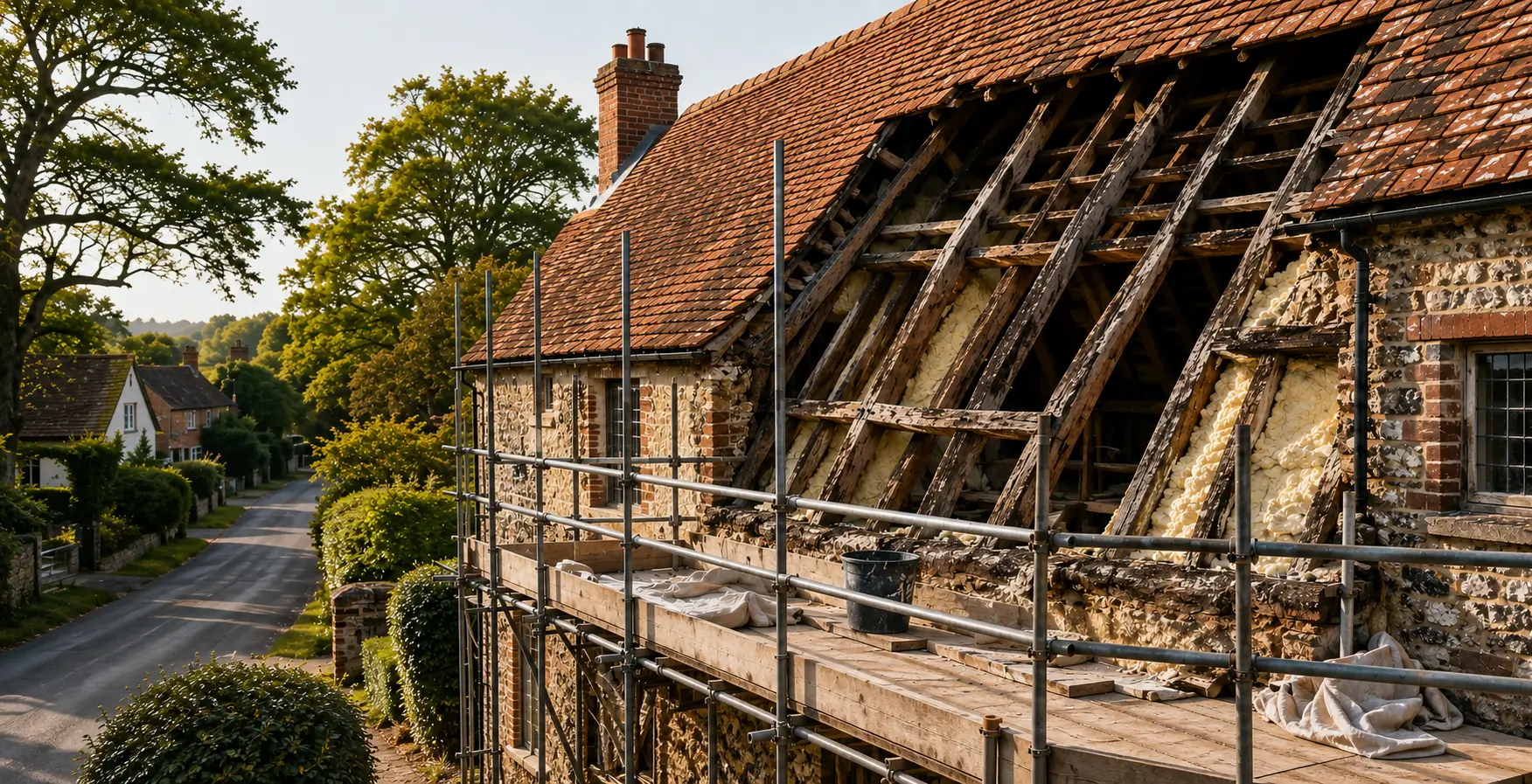
Foam sprayed onto centuries-old rafters cannot be cleared in a hurry. We work by hand on original timber and document everything a heritage-aware survey will want to see.
Spray Foam Removal In Bishop's Waltham
Bishop's Waltham grew around the palace the Bishops of Winchester built here, and the ruins still stand at the edge of town. Much of the centre falls inside a conservation area, with timber-framed and early brick buildings along Brook Street and the lanes off it. Housing of that age was built with no cavity, no membrane and no ventilation strategy, and the roof structures are frequently original cut timber. That changes what is at stake. On a modern house a damaged rafter is swapped for treated timber cut to match. Here the rafter is part of what the property is, and in a listed building it may be legally protected. Foam does two things to it at once: hides the condition of irreplaceable structure, and seals a roof designed to breathe. Consent is worth checking early, because altering the covering or adding ventilation openings may need permission before work starts. We raise that at survey rather than leaving you to find out.




Old Timber Gets Hand Tools And Time
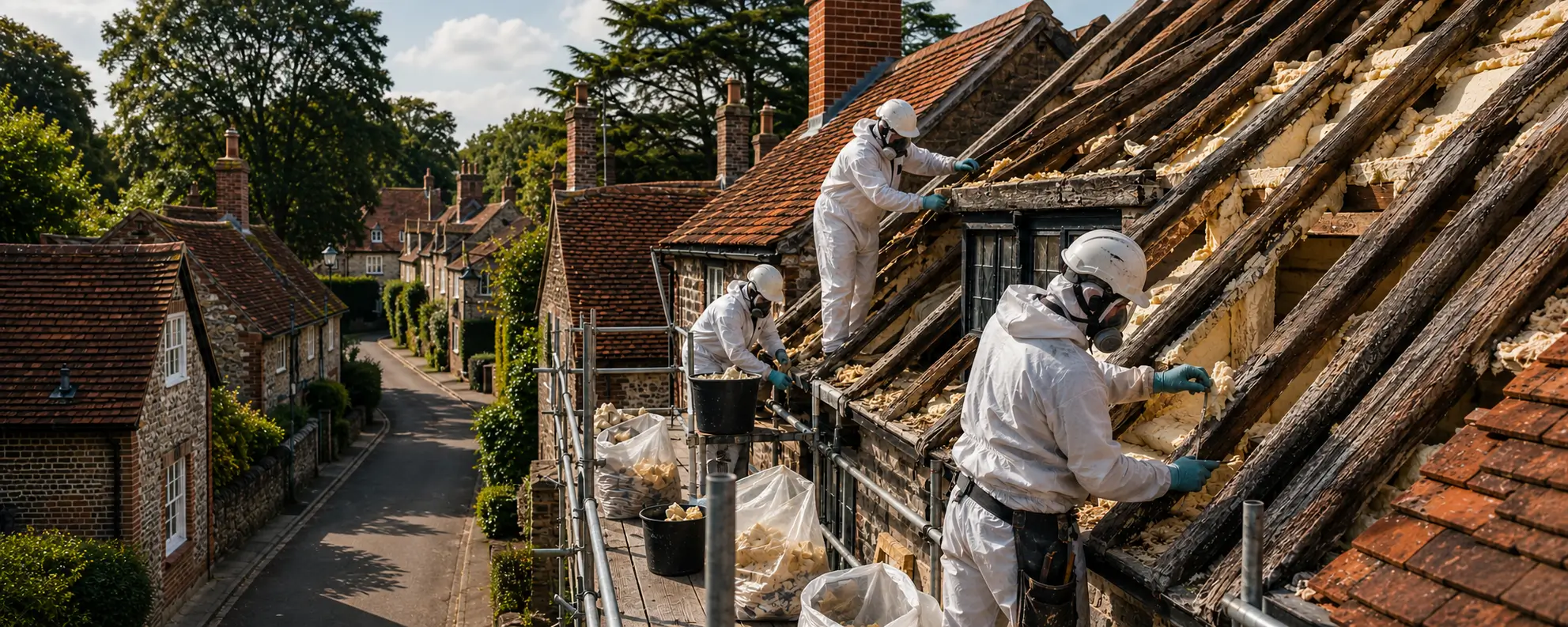
The quickest way to clear foam off an old rafter is also the way that ruins it. Heat, solvent or an abrasive wheel will shift closed-cell fast and take the surface of centuries-old oak with it, and on a conservation-area property that is damage nobody can undo. So the whole strip-out is hand-led on period structures and we accept it takes longer. If we think a conservation officer should see the roof before we touch it, we will say so, even where that delays the work and costs us the start date.

15+ Years of Roofing Expertise
Our experienced roofing team understands the structure beneath your spray foam insulation, allowing us to remove it safely while protecting roof timbers, tiles and other essential components.

Specialist Spray Foam Removal
With five years dedicated to spray foam insulation removal, we safely remove both open-cell and closed-cell foam using proven techniques that minimise disruption and help preserve your roof's condition.

Honest Advice & Transparent Pricing
We believe in straightforward recommendations, competitive pricing and no hidden costs. Every quotation is clear, with free, no-obligation advice to help you make the right decision for your property.
What Owners Of Period Property Ask Here
Conservation area status and the risk to irreplaceable timber account for most of what we are asked here.
Do you take the waste away, or do I need a skip?
We take it. Most household recycling centres will not accept spray foam in bulk, and moving it yourself without a registered waste carrier licence is against the law. It leaves under our own licence and you get the Waste Transfer Note as proof of where it went.
How long does the work take?
Most UK jobs run two to five working days. Where yours falls depends on the size of the roof, how much foam is there and how easy the space is to access. A small loft with a thin layer of open-cell foam sits at the short end, a detached roof bonded in closed-cell at the long end.
How much does spray foam removal cost in Bishops Waltham?
There is no flat rate we could give you before seeing the roof. Price turns on the foam type, how much of the roof it covers, the condition of the timber underneath and how hard the space is to reach. The survey is free, and the written figure it produces does not move once work starts.
What happens when I book a survey in Bishops Waltham?
We come out and get into the roof space. That tells us the foam type, how far it spreads, the condition of the timber underneath and how equipment will reach it. You then get a written quotation covering the whole job. The survey is free and carries no obligation.
Can original oak rafters be damaged during removal?
They can, by the wrong method. Heat, solvent or an abrasive wheel will shift closed-cell foam fast and take the surface of the oak with it. On period structures we work by hand along the grain and accept that it takes longer.
Do I need listed building consent to remove spray foam?
Removal on its own often does not, but altering the covering or forming new ventilation openings can. We check the property's status at survey and set out in writing what we think needs permission before anything starts.
Professional Spray Foam Removal Across Hampshire
JSA Spray Foam Removal proudly serves homeowners and commercial properties throughout Hampshire and the surrounding areas, delivering trusted spray foam removal, roofing services and free, no-obligation quotations wherever you need us.

Let's Work Together

Need a Roofer You Can Rely On?
From a slipped tile to a full re-roof, JSA Roofing Solutions gives you honest advice, quality workmanship and more than 15 years of experience across Hampshire. Get in touch for a free, no-obligation quotation and clear written costs before any work begins on your roof.


8:00 AM – 6:00 PM
Saturday & Sunday
Closed