

Spray Foam Removal in Eastleigh
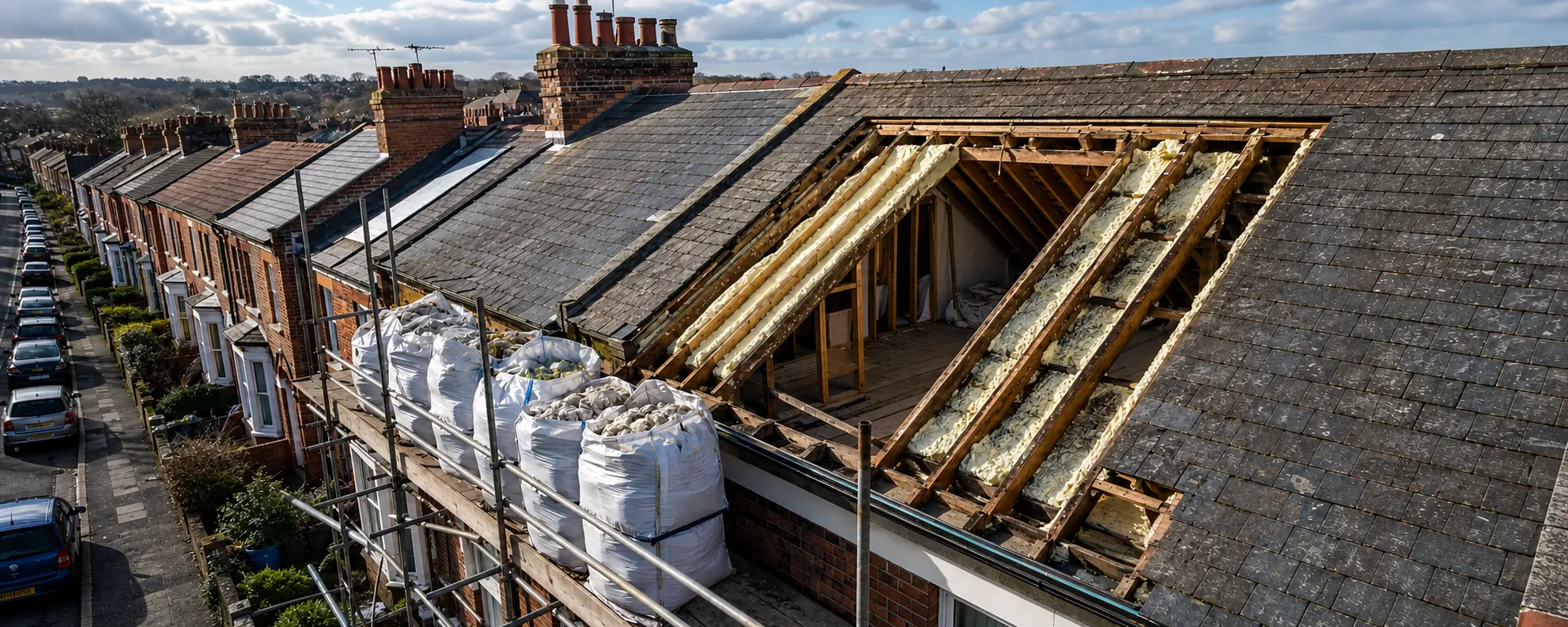
Eastleigh's railway terraces have some of the tightest loft access in Hampshire. We plan around it, strip the foam by hand, and leave the roof ready for inspection.
Spray Foam Removal In Eastleigh And Chandler's Ford
Eastleigh exists because of the railway. The works drew thousands of families here from the 1890s, and the housing built for them, tight terraces and modest semis laid out in grids near the line, still makes up much of the older stock. Chandler's Ford to the north is a different proposition: interwar and postwar semis and detached houses on larger plots. Those two behave differently once foam is involved. Railway terraces tend to have small hatches and shallow roof voids, which limits what can be carried in and out and changes how containment is set up. A crew in a Chandler's Ford semi can stage equipment in the loft itself. In a terrace off Bishopstoke Road there is barely room to turn, and every bag of debris comes down through the house unless extraction is doing that work instead. We measure the access at survey rather than discovering it on the day.




Tight Lofts Reward Planning Over Muscle
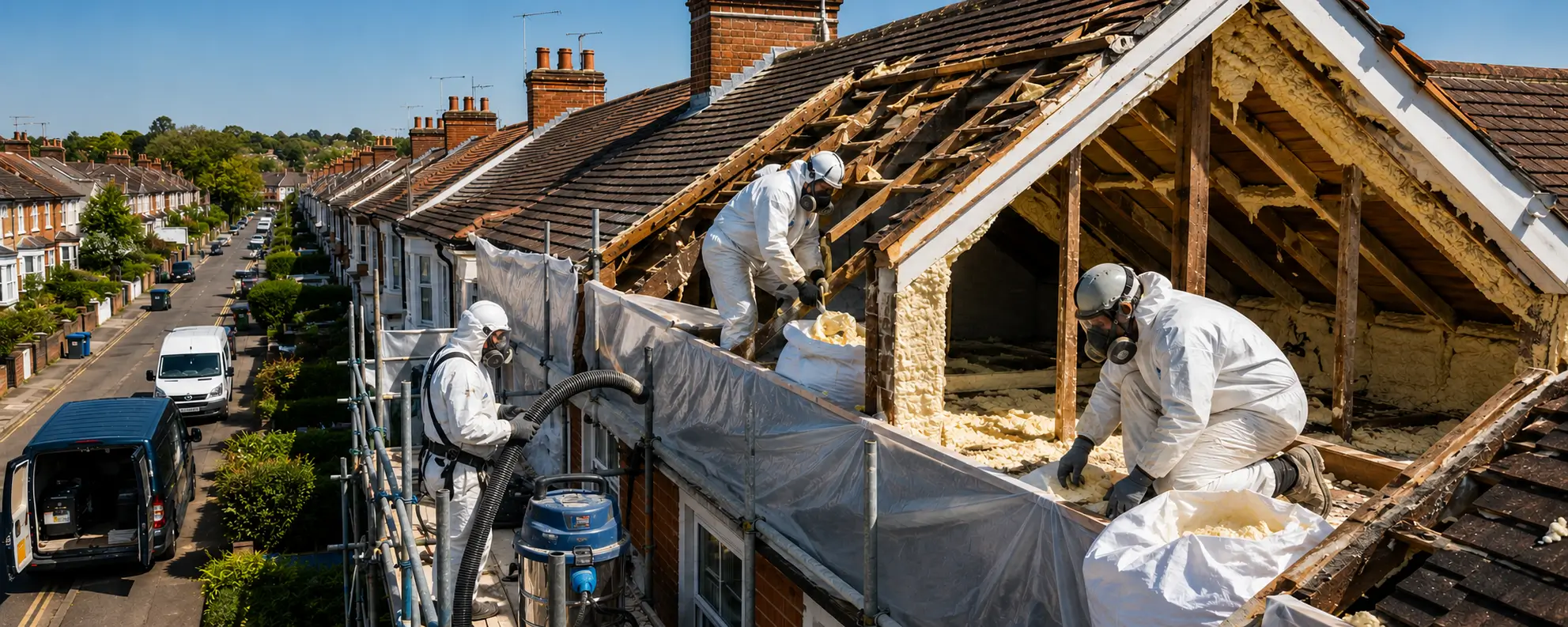
The hardest part of an Eastleigh terrace is getting in and out. A hatch built for a person and a suitcase now has to pass equipment, extraction hose and every kilogram of foam coming off the roof. We measure hatch size, void depth and where the extraction line runs at survey, and the quote is built on that, which is why it does not move once we start. Containment seals the hatch and protects the landing before the first cut, so the dust that would travel into the bedrooms leaves through the vacuum instead.

15+ Years of Roofing Expertise
Our experienced roofing team understands the structure beneath your spray foam insulation, allowing us to remove it safely while protecting roof timbers, tiles and other essential components.

Specialist Spray Foam Removal
With five years dedicated to spray foam insulation removal, we safely remove both open-cell and closed-cell foam using proven techniques that minimise disruption and help preserve your roof's condition.

Honest Advice & Transparent Pricing
We believe in straightforward recommendations, competitive pricing and no hidden costs. Every quotation is clear, with free, no-obligation advice to help you make the right decision for your property.
What Eastleigh Homeowners Ask About Access
Access and mess dominate here, most of it from owners of older railway terraces where the loft hatch was never meant for work on this scale.
How much does spray foam removal cost in Eastleigh?
There is no flat rate we could give you before seeing the roof. Price turns on the foam type, how much of the roof it covers, the condition of the timber underneath and how hard the space is to reach. The survey is free, and the written figure it produces does not move once work starts.
What happens when I book a survey in Eastleigh?
We come out and get into the roof space. That tells us the foam type, how far it spreads, the condition of the timber underneath and how equipment will reach it. You then get a written quotation covering the whole job. The survey is free and carries no obligation.
Do you take the waste away, or do I need a skip?
We take it. Most household recycling centres will not accept spray foam in bulk, and moving it yourself without a registered waste carrier licence is against the law. It leaves under our own licence and you get the Waste Transfer Note as proof of where it went.
How long does the work take?
Most UK jobs run two to five working days. Where yours falls depends on the size of the roof, how much foam is there and how easy the space is to access. A small loft with a thin layer of open-cell foam sits at the short end, a detached roof bonded in closed-cell at the long end.
Will you carry debris down through the house?
As little as we can manage. Extraction pulls the loose foam and dust out as it comes off, which is the point of running it through the whole strip-out rather than bagging up afterward. What cannot be extracted is bagged and sealed before it leaves the loft.
My loft hatch is tiny. Does that stop the job?
It changes the plan, not the outcome. We measure hatch and void depth at survey and run extraction so debris leaves through the vacuum line rather than in bags down the stairs. Small hatches are standard on railway terraces.
Professional Spray Foam Removal Across Hampshire
JSA Spray Foam Removal proudly serves homeowners and commercial properties throughout Hampshire and the surrounding areas, delivering trusted spray foam removal, roofing services and free, no-obligation quotations wherever you need us.

Let's Work Together
Need a Roofer You Can Rely On?
From a slipped tile to a full re-roof, JSA Roofing Solutions gives you honest advice, quality workmanship and more than 15 years of experience across Hampshire. Get in touch for a free, no-obligation quotation and clear written costs before any work begins on your roof.


8:00 AM – 6:00 PM
Saturday & Sunday
Closed