

Spray Foam Removal in Fareham
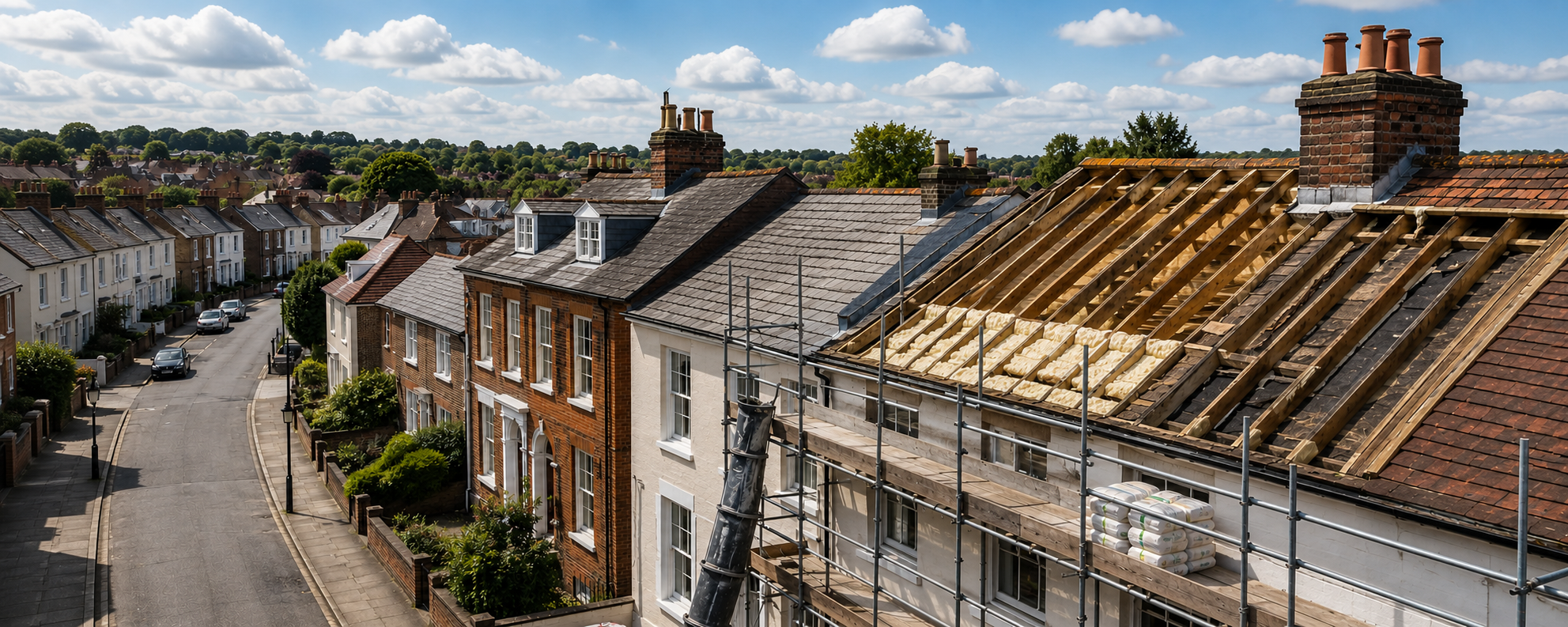
Fareham runs from Georgian High Street to postwar estate, and the right removal method depends which you own. We survey first, then strip the foam by hand.
Spray Foam Removal Across Fareham And Portchester
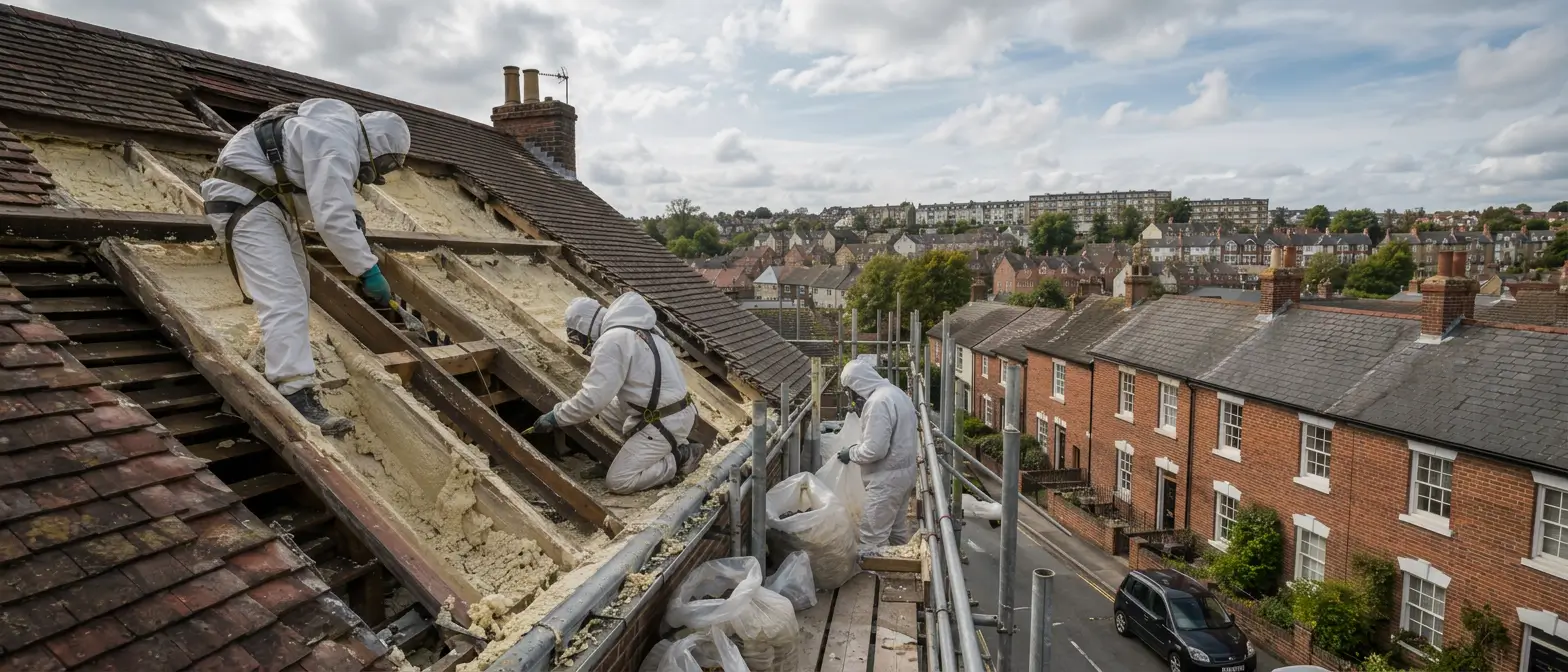
Fareham's old High Street is one of the better preserved Georgian streets in south Hampshire, running down toward the creek, and the town's red brick was made locally and shipped out by barge. Around that core sit decades of later growth, and out toward Portchester the housing is largely postwar and modern estate. The spread means the survey does more work here than in a single-era town. An older property near the creek may carry foam sprayed over historic timber, where removal has to be gentle enough not to scar wood a surveyor is about to assess. An estate house built in the 1970s more likely had foam added as part of a wider insulation upgrade, onto trussed timber that was sound at the time. Same problem for a valuer either way, since neither roof can be inspected through the foam, but the two need different care and a different number of days. We work that out on the visit rather than assume from the postcode.




The Survey Sets The Price, Not The Postcode
A town with this much variation in housing age cannot be quoted from a table. We look at the roof, establish the foam type, its depth and what it has bonded itself to, then price from what is there. If it turns out to cover less than the hatch suggested, the figure comes down. If the timber underneath needs treating, you hear that before we start rather than as a variation halfway through. Quotes are free and carry no obligation.

15+ Years of Roofing Expertise
Our experienced roofing team understands the structure beneath your spray foam insulation, allowing us to remove it safely while protecting roof timbers, tiles and other essential components.

Specialist Spray Foam Removal
With five years dedicated to spray foam insulation removal, we safely remove both open-cell and closed-cell foam using proven techniques that minimise disruption and help preserve your roof's condition.

Honest Advice & Transparent Pricing
We believe in straightforward recommendations, competitive pricing and no hidden costs. Every quotation is clear, with free, no-obligation advice to help you make the right decision for your property.
What Fareham Homeowners Ask Before A Survey
Old town and later estate bring different concerns to a Fareham job. These are the questions we hear most across both.
Do you take the waste away, or do I need a skip?
We take it. Most household recycling centres will not accept spray foam in bulk, and moving it yourself without a registered waste carrier licence is against the law. It leaves under our own licence and you get the Waste Transfer Note as proof of where it went.
How long does the work take?
Most UK jobs run two to five working days. Where yours falls depends on the size of the roof, how much foam is there and how easy the space is to access. A small loft with a thin layer of open-cell foam sits at the short end, a detached roof bonded in closed-cell at the long end.
How much does spray foam removal cost in Fareham?
There is no flat rate we could give you before seeing the roof. Price turns on the foam type, how much of the roof it covers, the condition of the timber underneath and how hard the space is to reach. The survey is free, and the written figure it produces does not move once work starts.
What happens when I book a survey in Fareham?
We come out and get into the roof space. That tells us the foam type, how far it spreads, the condition of the timber underneath and how equipment will reach it. You then get a written quotation covering the whole job. The survey is free and carries no obligation.
My roof was re-covered in the 1980s. Could foam have gone on over new felt?
It happens. Where a covering was renewed and foam added later, the felt underneath may still be intact and the foam bonded to it rather than to bare timber. That is one of the first things we check at survey, because it changes how the foam comes away.
I am in a period property near the creek. Is that a different job to an estate house?
A different job entirely. Older property near the creek may have foam sprayed over historic timber, where removal has to be gentle enough not to scar wood a surveyor is about to assess. An estate roof out toward Portchester has trussed timber and standard access.
Professional Spray Foam Removal Across Hampshire
JSA Spray Foam Removal proudly serves homeowners and commercial properties throughout Hampshire and the surrounding areas, delivering trusted spray foam removal, roofing services and free, no-obligation quotations wherever you need us.

Let's Work Together
Need a Roofer You Can Rely On?
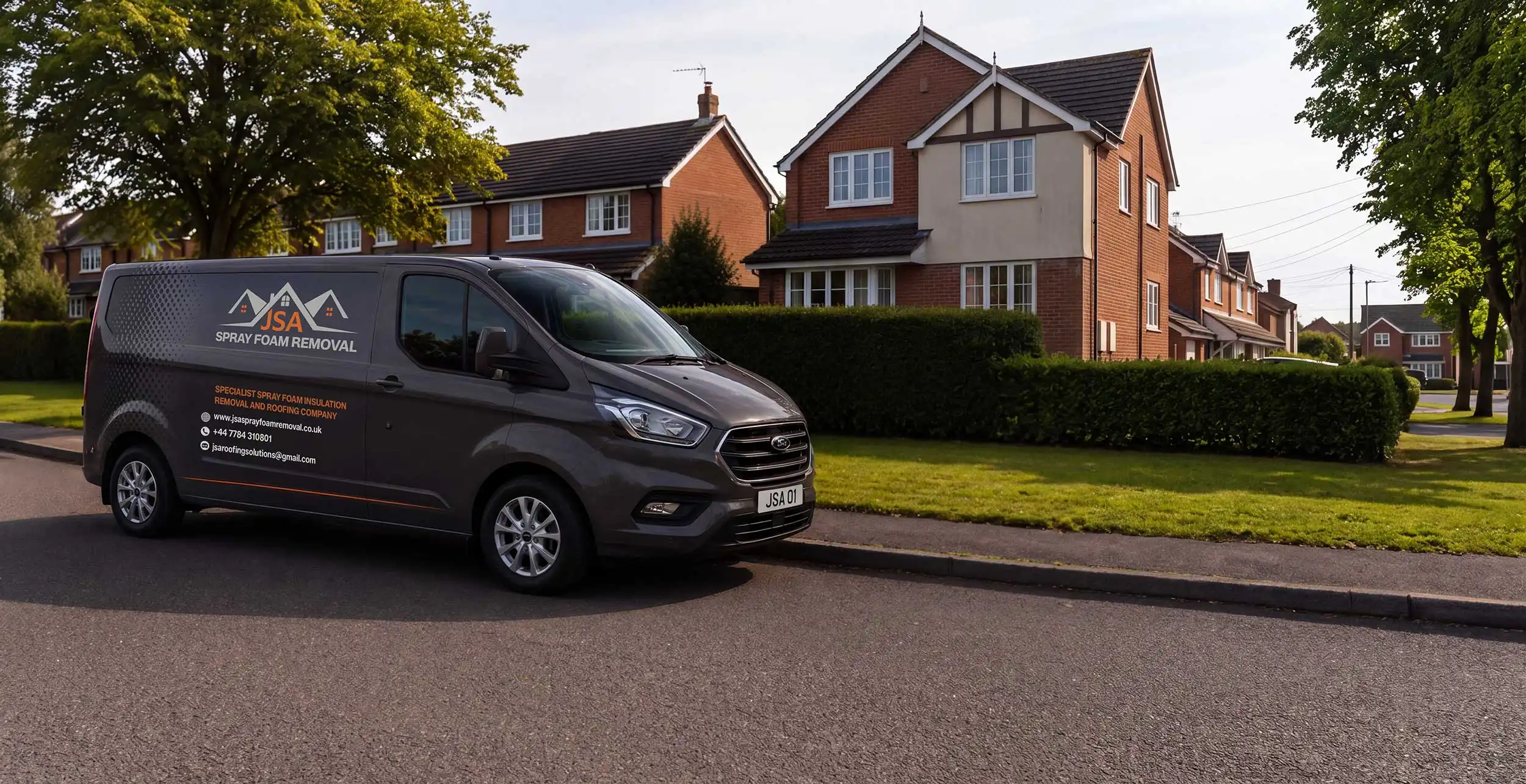
From a slipped tile to a full re-roof, JSA Roofing Solutions gives you honest advice, quality workmanship and more than 15 years of experience across Hampshire. Get in touch for a free, no-obligation quotation and clear written costs before any work begins on your roof.


8:00 AM – 6:00 PM
Saturday & Sunday
Closed