

Efficient Mechanical Spray Foam Removal Using Vacuum Clears Roof Debris
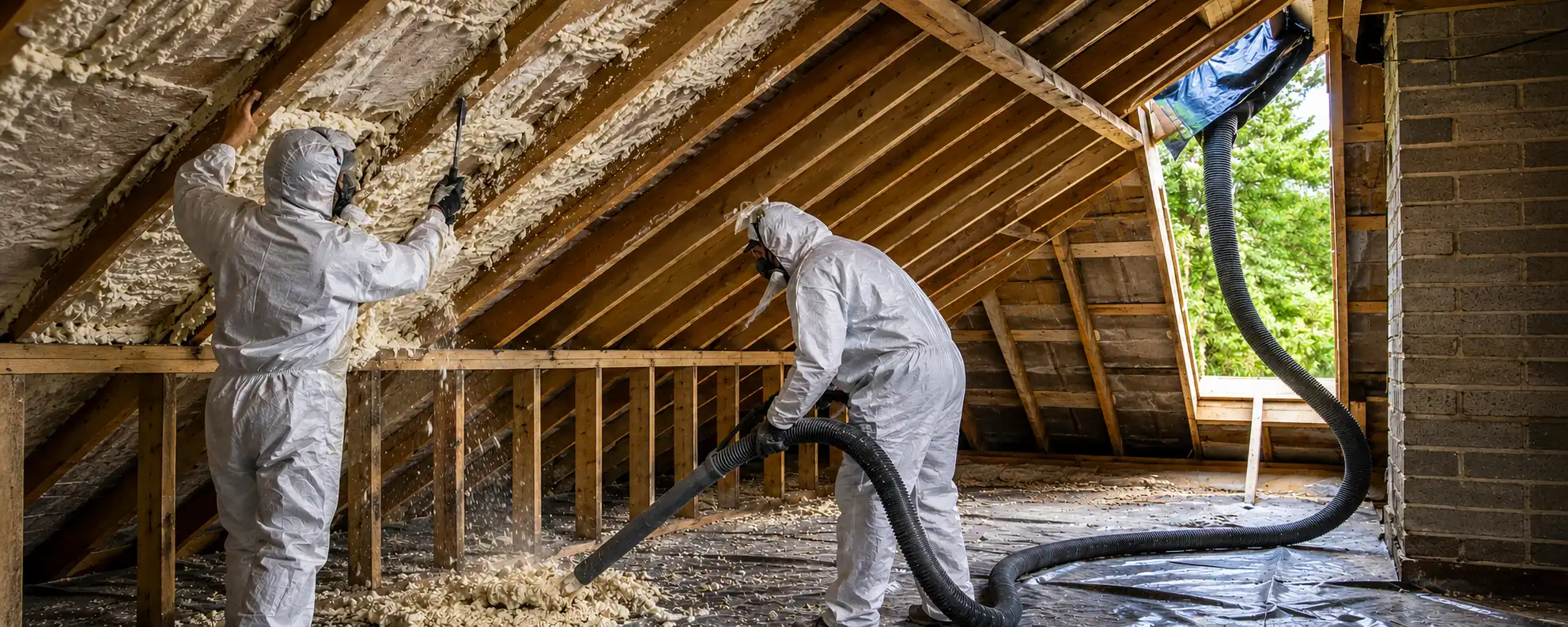
A stripped roof drops more loose material than a skip run handles. We draw it out of the roof space as we work, so nobody carries sacks down your stairs.




Why Loose Foam And Dust Are A Problem On Their Own
Removing the bulk of the foam is only half the job. What happens to the loose material and dust left behind causes problems of its own.
A job that has to be reopened
Foam missed behind joists and in wall voids keeps shedding dust for weeks after the crew leaves. Homeowners end up paying for a second visit to finish what hand removal should have caught the first time.
A certificate that will not hold up
Extraction without vacuum containment leaves fine debris in the loft even after the bulk is gone. A surveyor who finds residue after completion can query whether the removal was ever finished, and that doubt is what a lender's certificate is meant to rule out.
A skip that cannot take it, a sign-off that waits
Foam waste is bulky, and a single stripped roof produces more of it than a standard skip run is built for. Whatever will not fit gets stockpiled on site, and the certificate cannot be issued until it is gone.
Debris that turns into someone else's cost
Hand-carried bags shed foam and dust on every staircase and landing on the way out. The clean-up bill for the removal spreads into rooms that were never part of the job.
What Extraction Sets Up For The Rest Of The Job
Clearing the loose material well is what makes the inspection, the reinstatement and the certification that follow mean something.
Mortgage and survey preparation
A surveyor asking for evidence the foam is gone, not just cut back, is asking the question vacuum extraction is built to answer. We photograph the space before, during and after extraction and log moisture readings throughout, giving an independent report something real to check against.
Roof cleaning, for roof-based jobs
Where the extraction was from a roof rather than a loft floor, we wash the covering down by hand, clear the gutters and treat any moss disturbed during the work, so nothing is left half finished once the vacuum lines come down.
Timber inspection
Extraction clears what hand removal misses, the fragments behind joists and in wall voids, which leaves the timber underneath exposed for inspection. We check every rafter and joist for soft or discoloured wood, insect activity and water staining, and photograph what we find.
Loft insulation replacement, if extracted at joist level
Where the extracted foam was standing in for loft insulation, we fit it back to the Building Regulations target of 270mm of mineral wool in two layers, or 120 to 150mm of rigid PIR board, so the loft is not left worse off than before.
Ventilation improvements
Whatever airflow the foam blocked before extraction, BS 5250 still sets the same cold-roof minimum: 25,000mm2 of ventilation per metre at the eaves, 5,000mm2 at the ridge. We reopen it once the space is clear, so the job does not just reset the same problem it removed.
Safe disposal of the waste
Extraction produces more loose material than hand removal, and none of it counts as something a household recycling centre will take in bulk. We bag it under vacuum as we go, remove it under our own licence and issue the Waste Transfer Note once it is done.
How Vacuum Extraction Works Alongside The Strip-Out
Extraction is not a separate job. It runs through every stage of the removal. Here is where it fits into the six steps.
Survey and plan
We work out how much loose material a job will produce and where it can travel, through the hatch and any gaps around pipework, before extraction equipment goes in. Method and price get agreed at this point.
Protect and contain
Extraction only helps if the space is sealed first, otherwise the vacuum is fighting an open system. The loft or roof space gets closed off and the extraction line run in before any foam is disturbed.
Strip the bulk foam
Extraction runs alongside the bulk strip rather than after it, pulling loose material out of the space as the main mass comes away instead of letting it settle on the floor or in the eaves.
Hand-finish and extract
The vacuum keeps running through the hand-finishing stage, drawing dust and fine fragments out as they are produced rather than after the fact, which is what separates extraction from bagging debris once it has already fallen.
Inspect and treat the timber
Extraction clears what hand removal alone tends to miss, the fragments behind joists and in wall voids, so the timber sits exposed by the time it gets inspected for decay, insect activity and water staining.
Reinstate, dispose and certify
Everything the vacuum collected goes into sealed bags on site, then off under our own registered waste carrier licence rather than in a single skip run at the end. The Waste Transfer Note, photographs and moisture readings go to you once the space has been checked over.
Why Homeowners Across Hampshire Choose JSA
JSA combines specialist spray foam removal with extensive roofing knowledge to deliver safe, professional results. From careful foam extraction and roof timber inspections to repairs and ventilation improvements, we provide a complete service backed by honest advice, transparent pricing and quality workmanship.

15+ Years of Roofing Expertise
Our experienced roofing team understands the structure beneath your spray foam insulation, allowing us to remove it safely while protecting roof timbers, tiles and other essential components.

Specialist Spray Foam Removal
With five years dedicated to spray foam insulation removal, we safely remove both open-cell and closed-cell foam using proven techniques that minimise disruption and help preserve your roof's condition.

Honest Advice & Transparent Pricing
We believe in straightforward recommendations, competitive pricing and no hidden costs. Every quotation is clear, with free, no-obligation advice to help you make the right decision for your property.
Trusted by Homeowners Across Hampshire
Read genuine customer reviews and see why homeowners and businesses trust JSA Spray Foam Removal for safe, professional workmanship. Visit our Checkatrade profile to discover honest feedback from customers who have experienced our reliable service and quality results firsthand.



Have Questions? We've Got the Answers
Find answers to the most common questions about spray foam insulation removal, roofing services, property surveys and our removal process. If you need further advice, our friendly team is always happy to help with free, no-obligation guidance.
What is mechanical spray foam extraction, and how is it different from hand removal?
It is vacuum extraction running alongside the strip-out, drawing loose material and dust out of the space as it is produced instead of letting it settle or carrying it out afterward in bags. Hand tools still do the work on the timber grain, extraction just handles what comes off.
Do I need mechanical extraction for a small loft job?
Not always. Extraction matters most where the volume of loose material is high, closed-cell that has crumbled, or a job producing a lot of dust. A small, contained loft with a thin layer of foam may not need it running throughout.
Does mechanical extraction reduce mess in occupied houses?
Yes, by a wide margin. Debris that would otherwise travel down through the house in bags instead leaves through the extraction line, so staircases, landings and rooms below the loft or roof stay clear of dust during the job.
Can extraction miss foam that hand removal would have caught?
Less likely than the reverse. Extraction exists to catch what hand removal alone misses, fragments behind joists and in wall voids, rather than replace the hand-finishing on the timber grain itself.
Where does the extracted foam and dust go?
Into sealed bags as it comes off the vacuum, then off site under our own registered waste carrier licence. None of it is loose material a household recycling centre will take in bulk, extracted or not.
Does using extraction speed up the job or slow it down?
Neither on its own, since it runs alongside the strip-out rather than as a separate stage. What it changes is how much debris ends up loose in the space and how clean the job is by the time it is done.
Professional Spray Foam Removal Across Hampshire
JSA Spray Foam Removal proudly serves homeowners and commercial properties throughout Hampshire and the surrounding areas, delivering trusted spray foam removal, roofing services and free, no-obligation quotations wherever you need us.

Let's Work Together

Need a Roofer You Can Rely On?
From a slipped tile to a full re-roof, JSA Roofing Solutions gives you honest advice, quality workmanship and more than 15 years of experience across Hampshire. Get in touch for a free, no-obligation quotation and clear written costs before any work begins on your roof.


8:00 AM – 6:00 PM
Saturday & Sunday
Closed